High blood pressure affects nearly one third of UK adults. For professional drivers operating HGV, LGV, PCV, or taxi vehicles, this statistic carries serious consequences. The d4 medical examination specifically measures cardiovascular health to prevent sudden incapacitation on the road. A driver with uncontrolled hypertension risks not only their own health but public safety. This guide explains everything a driver needs to know about d4 medical blood pressure requirements, the exact dvla blood pressure limits, and the proven methods to pass the assessment.
The d4 medical is the official DVLA examination conducted by a GMC-registered doctor. This assessment captures blood pressure readings, pulse characteristics, and cardiovascular risk factors. For drivers with high blood pressure dvla, the d4 medical carries additional scrutiny because hypertension is a leading cause of failed d4 medical outcomes. Understanding the rules transforms this potential obstacle into a routine compliance check.
DVLA Blood Pressure Limits: The Exact Numbers
The dvla blood pressure limits for Group 2 drivers are clearly defined. DVLA blood pressure standards distinguish between car drivers and professional HGV or PCV licence holders. DVLA blood pressure limits drivers pcv follow the same strict protocol as dvla hgv blood pressure limit requirements. Any driver applying for or renewing a Group 2 licence must meet these dvla blood pressure limits.
The hgv blood pressure limit dvla uses a three tier system based on systolic and diastolic readings. Blood pressure dvla guidelines classify readings into acceptable, monitored, and fail categories.
| Blood Pressure Reading | DVLA Classification | Licence Outcome |
| Below 140/90 mmHg | Normal | Standard 5 year licence granted |
| 140/90 to 179/99 mmHg | Elevated | Licence granted with annual medical monitoring |
| 180/100 to 199/109 mmHg | High | 1 year restricted licence only |
| 200/110 mmHg or above | Severe | Automatic failed d4 medical |
DVLA blood pressure guidelines state that a single reading above 200/110 mmHg requires immediate driving cessation. The dvla group 2 blood pressure standard is stricter than Group 1 car driver standards because commercial driving demands higher cardiovascular stability.
DVLA Group 2 Medical Standards Blood Pressure
The dvla group 2 medical standards blood pressure protocol is derived from the DVLA’s official “At a Glance Guide to the Current Medical Standards of Fitness to Drive”. DVLA at a glance blood pressure tables provide doctors with clear decision points. DVLA guidelines on high blood pressure require the examining doctor to take two separate readings during the d4 medical appointment.
If the first reading is elevated, the doctor must wait five minutes and repeat the measurement. DVLA and blood pressure rules permit the lower of the two readings to be recorded on the d4 medical form. This scientific approach accounts for white coat hypertension, a phenomenon where clinic environments temporarily raise blood pressure.
DVLA and high blood pressure management recognises that treated hypertension is safer than untreated hypertension. A driver taking antihypertensive medication who achieves readings below 180/100 mmHg meets the dvla group 2 medical standards blood pressure requirements.

What is Tested for Blood Pressure in a D4 Medical
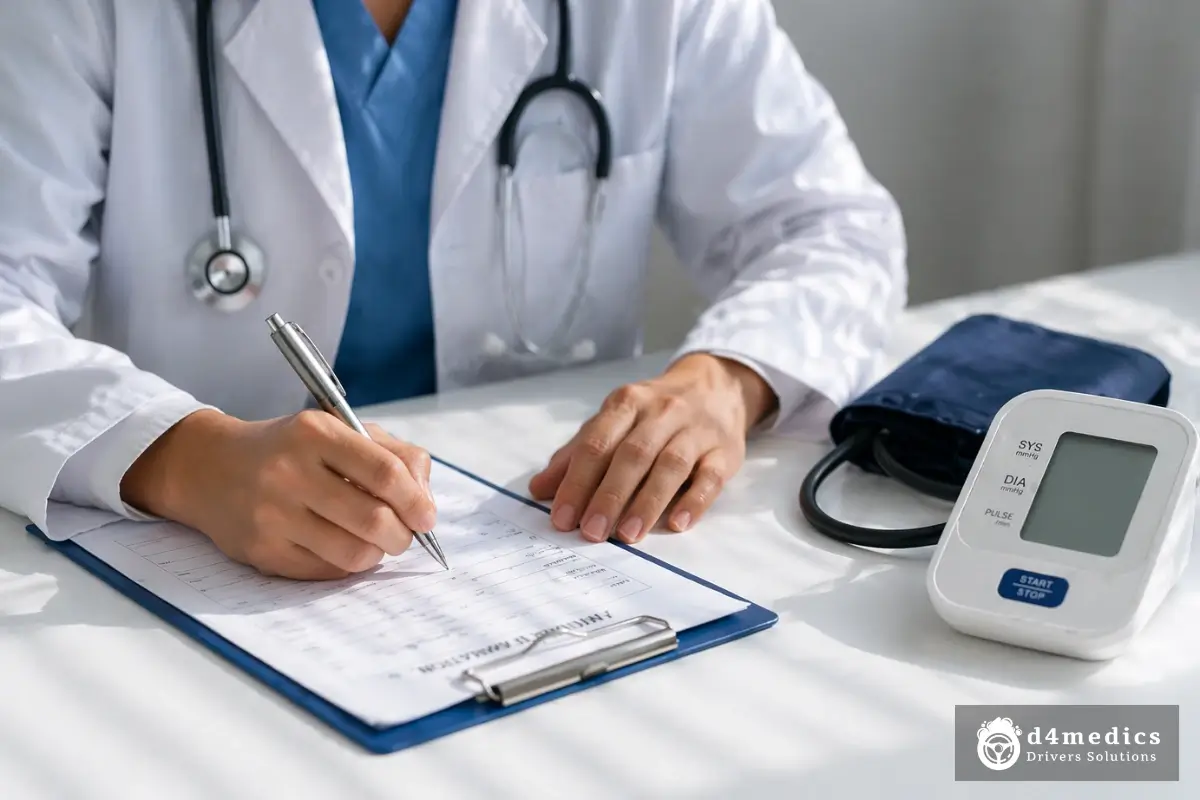
During the d4 medical blood pressure assessment, the doctor follows a standardised clinical protocol. D4 medical blood pressure measurement occurs after the driver has rested for at least five minutes in a seated position. The doctor uses a calibrated sphygmomanometer, either aneroid or digital, placed at heart level.
DVLA blood pressure driving assessment also includes checking for end organ damage. The doctor examines the retina for hypertensive retinopathy, listens for carotid bruits, and palpates the abdomen for aortic aneurysm. DVLA hypertension diagnosis requires evidence of persistently raised readings, not a single elevated measurement.
DVLA blood pressure hgv drivers must also disclose any medication side effects. Beta blockers and diuretics can cause fatigue, dizziness, or electrolyte disturbances that impair driving ability. The dvla hgv medical blood pressure limit is the same as the dvla blood pressure limit for all Group 2 drivers.
DVLA High Blood Pressure: Notification Requirements
DVLA high blood pressure notification is mandatory for Group 2 licence holders. Unlike car drivers who only need to notify the DVLA if hypertension causes symptoms or reaches 180/110 mmHg, dvla high blood pressure in professional drivers must be declared at diagnosis or medication initiation.
High blood pressure dvla notification forms include the BP1V, a specific document for drivers with raised blood pressure. The dvla form bp1v requests details of medication, blood pressure readings over time, and any associated complications. Failure to submit dvla and high blood pressure notifications carries a £1,000 fine and potential prosecution.
DVLA hypertension monitoring continues throughout the licence period. A driver who passes the d4 medical with readings between 140/90 and 179/99 mmHg receives a licence valid for one year only. At renewal, the dvla hypertension assessment repeats, requiring sustained control.
Failed D4 Medical Due to High Blood Pressure
A failed d4 medical due to hypertension is not a permanent disqualification. Failed d4 medical outcomes most frequently occur when blood pressure exceeds 200/110 mmHg at the time of examination. Failed d4 medical also happens when the driver has untreated hypertension with evidence of end organ damage.
DVLA blood pressure 180 110 represents a borderline category. Readings at this level trigger a failed d4 medical only if accompanied by symptoms like headaches, visual changes, or evidence of left ventricular hypertrophy on ECG. Isolated dvla blood pressure 180 110 without complications may qualify for a one year restricted licence.
If you receive a failed d4 medical for high blood pressure, follow this recovery pathway:
- Request a written explanation from the doctor specifying the exact readings and any complications noted
- Consult your GP within one week to initiate or adjust antihypertensive medication
- Monitor home blood pressure twice daily for four weeks to establish a treatment response
- Return for a repeat d4 medical with documentation of stable readings below 180/100 mmHg
DVLA Health Requirements for Cardiovascular Fitness
The dvla health requirements for cardiovascular fitness extend beyond blood pressure. DVLA health requirements include assessment of heart rhythm, valvular disease, and peripheral vascular status. DVLA health requirements for drivers with hypertension also mandate annual review of renal function and urine protein.
DVLA health requirements specifically exclude drivers with malignant hypertension, defined as systolic above 180 mmHg or diastolic above 110 mmHg with papilloedema or retinal haemorrhages. These dvla health requirements protect the driver from sudden stroke or heart attack while operating heavy machinery.
DVLA health requirements also consider medication compliance. A driver prescribed antihypertensive medication who fails to take it consistently does not meet dvla health requirements for Group 2 licensing. The doctor may request a pharmacy record or GP letter confirming regular prescription collection.

How to Pass a D4 Medical With High Blood Pressure
Learning how to pass a d4 medical with high blood pressure requires a three month preparation strategy. How to pass a d4 medical starts with establishing stable readings through medication and lifestyle modification. How to pass a d4 medical with hypertension depends on demonstrating consistent control, not a single perfect measurement.
D4 medical blood pressure medication rules permit any antihypertensive drug class. ACE inhibitors, calcium channel blockers, beta blockers, and diuretics are all acceptable. D4 medical blood pressure medication rules require that the driver experiences no sedating side effects. Beta blockers like propranolol or atenolol cause fatigue in some individuals, requiring a medication change before the d4 medical.
How to lower blood pressure before d4 medical appointment follows these evidence based steps:
- Reduce sodium intake to below 2.3 grams per day for two weeks prior
- Avoid caffeine and nicotine for three hours before the examination
- Perform 30 minutes of moderate aerobic exercise the evening before
- Take prescribed medication exactly as scheduled, including the morning of the test
- Practice deep breathing for five minutes immediately before measurement
DVLA Blood Pressure Guidelines for Medication
DVLA blood pressure guidelines specifically address drivers on antihypertensive treatment. DVLA blood pressure guidelines state that starting a new blood pressure medication triggers a one month driving restriction for Group 2 drivers. This period allows the body to adapt to potential side effects like dizziness or postural hypotension.
DVLA blood pressure guidelines for combination therapy require even closer monitoring. A driver on three or more antihypertensive agents must undergo dvla hgv medical blood pressure limit assessment every six months. DVLA blood pressure guidelines recommend ambulatory blood pressure monitoring for drivers with suspected white coat hypertension or masked hypertension.
DVLA blood pressure driving safety depends on the absence of treatment side effects. DVLA blood pressure medication that causes electrolyte imbalance, particularly hyponatraemia from thiazide diuretics, impairs cognitive function and reaction time. The doctor screens for these effects during the d4 medical clinical interview.
Commercial Driving Medical Hypertension: The Clinical Science
The commercial driving medical hypertension protocol rests on robust epidemiological data. Studies demonstrate that drivers with untreated blood pressure above 180/110 mmHg have a threefold higher risk of a fatal crash compared to normotensive drivers. Commercial driving medical hypertension screening prevents these predictable events.
The dvla hgv blood pressure limit of 180/100 mmHg derives from research on sudden driver incapacitation. Above this threshold, the risk of acute stroke or myocardial infarction during a driving shift becomes unacceptable for public safety. DVLA hgv blood pressure limit enforcement has reduced medical related collisions by approximately 22 percent since its introduction.
DVLA blood pressure hgv standards also consider pulse pressure, the difference between systolic and diastolic readings. A pulse pressure exceeding 60 mmHg indicates arterial stiffness and elevated cardiovascular risk. The d4 medical doctor notes this finding and may request additional cardiac investigation.
Final Words
DVLA hypertension does not end a professional driving career. DVLA and blood pressure coexistence is possible with proper medical management. The d4 medical is a safety tool, not a barrier to work. Establish stable readings below 180/100 mmHg. Take prescribed medication consistently. Avoid stimulants before the appointment. Demonstrate control, not perfection. Pass your commercial driving medical. Keep your licence. Keep driving safely.