
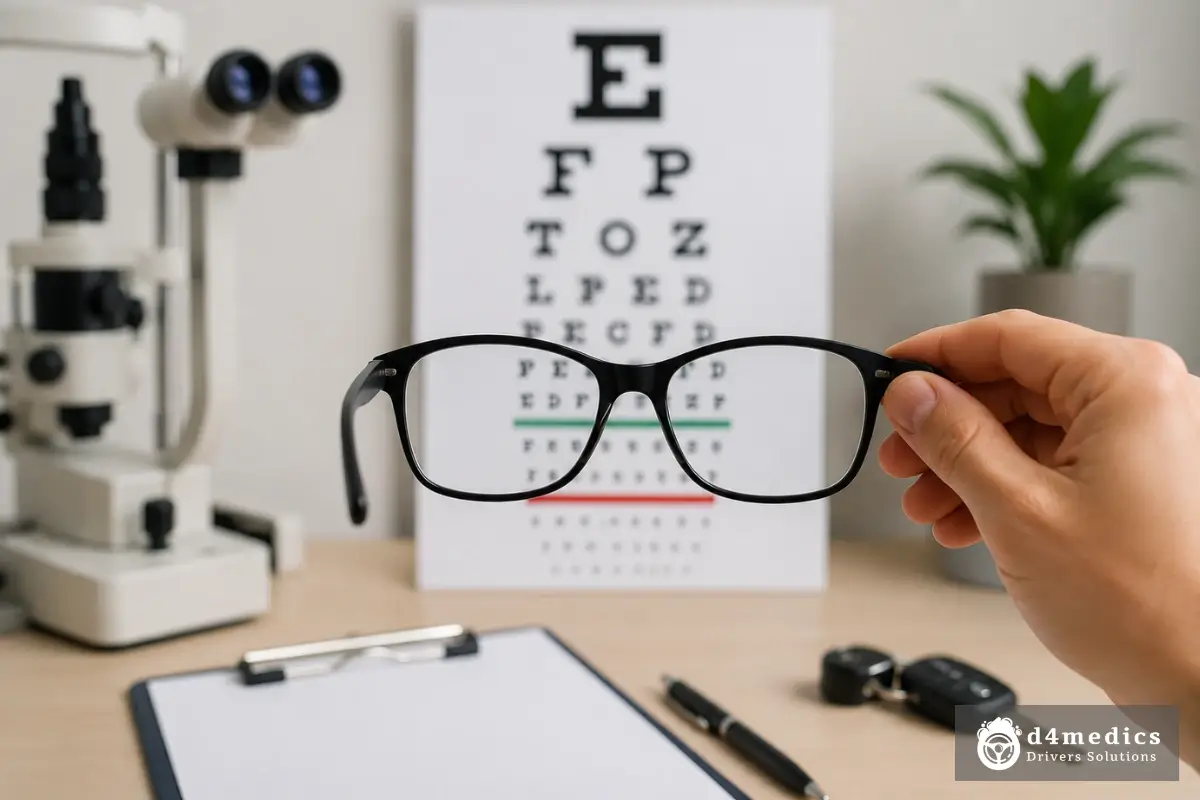
A professional driver spends hours watching the road, reading signs, and reacting to hazards. Your vision makes every other skill possible. The d4 medical places special emphasis on eyesight because a driver with poor vision cannot drive safely. Medical fitness to drive depends on meeting the dvla vision standards group 2. These rules exist to protect you and everyone sharing the road. This guide explains the d4 medical eye test, the exact standards you must meet, and how to prepare for success.
Driver medicals uk providers like D4 Medics conduct thousands of d4 medical vision test assessments each year. Their doctors understand the dvla group 2 vision standards and help drivers navigate the process. Book d4 medical appointments through a specialist provider ensures the doctor knows exactly what the DVLA requires.
What to Expect at Your D4 Medical Eye Test
The d4 medical eye test follows a standard protocol. The doctor first asks you to read a number plate from 20 metres away. This simple test confirms basic functional vision. If you pass, the doctor proceeds to the formal driving medical eye test.
The d4 medical vision test uses a Snellen chart. This chart displays rows of letters that decrease in size. You stand 6 metres from the chart and read the smallest line possible. The doctor tests each eye separately and then both eyes together.
Eye test for d4 medical also includes:
- Visual field assessment (checking peripheral vision)
- Colour perception screening for specific licence categories
- Examination of the eye for cataracts or other conditions
- Review of any corrective lenses you wear
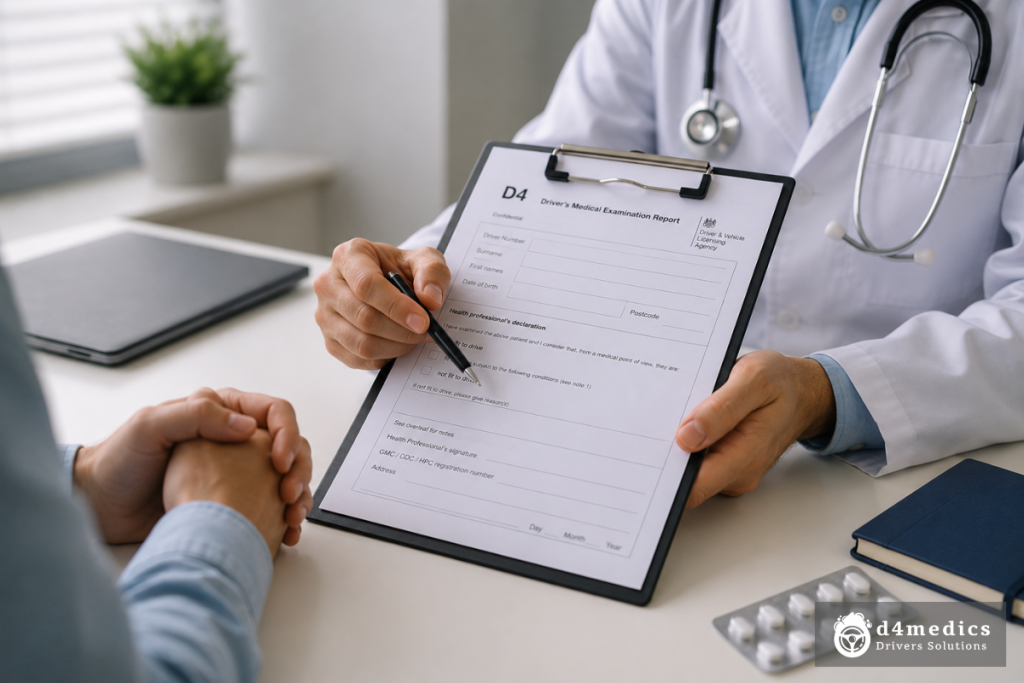
The entire d4 medical eye test takes 5 to 10 minutes when your vision is healthy. The doctor records the results directly on the d4 medical form.
DVLA Vision Standards Group 2: The Exact Numbers
The dvla vision standards group 2 for HGV, LGV, PCV, and taxi drivers are stricter than car driver standards. DVLA group 2 vision standards require professional drivers to see more clearly because they operate larger vehicles on busier roads.
| Vision Component | Group 2 (HGV/PCV) Standard |
| Better Eye Visual Acuity | At least Snellen 6/7.5 |
| Worse Eye Visual Acuity | At least Snellen 6/60 |
| Visual Field (Horizontal) | Minimum 160 degrees |
| Visual Field Extension | 70 degrees left and right |
| Visual Field Upward | 30 degrees |
| Visual Field Downward | 30 degrees |
| Central Vision | No defects within 30 degrees |
| Corrective Lenses | Permitted up to (+) 8 dioptres |
DVLA health requirements for vision also include a 20 metre number plate test. You must read a new style number plate from this distance with glasses or contact lenses if you normally wear them.
DVLA group 2 medical standards monocular vision (vision in only one eye) carries a specific rule. Group 2 drivers with monocular vision must stop driving and notify the DVLA immediately. The law bars licensing if corrected acuity falls below 3/60 in the affected eye.
Driving With Cataracts and the D4 Medical
Driving with cataracts is permitted in most cases. A cataract diagnosis alone does not trigger DVLA notification. Driving with cataracts becomes a notifiable condition only when both eyes are affected AND your vision fails to meet the dvla vision standards group 2.
You MUST tell the DVLA if:
- Cataracts affect BOTH eyes
- Your vision no longer meets the minimum driving standard
- An optician advises that your vision is below standard
Driving with cataracts without notifying the DVLA carries a £1,000 fine and potential prosecution. A common cataract operation restores clear vision. After successful surgery with corrected vision meeting the dvla vision standards group 2, most drivers return to work.
Driving With Glaucoma: Notification Rules
Driving with glaucoma requires notification for Group 2 licence holders. Unlike car drivers who only notify for bilateral glaucoma, driving with glaucoma in ONE eye triggers mandatory DVLA contact.
DVLA health requirements for driving with glaucoma include:
- Submitting a visual field test report
- Providing ophthalmologist assessment letters
- Confirming no central vision defects
- Demonstrating stable intraocular pressure with treatment
The DVLA does not require glaucoma testing for every licence renewal. However, once diagnosed, you must notify the agency. Studies show only 12 percent of people driving with glaucoma lose their licence after testing. Most continue driving with proper management.
Monocular Vision and Group 2 Licences
DVLA group 2 medical standards monocular vision questions are common among drivers who have lost sight in one eye. The answer is strict. A Group 2 driver with monocular vision who does not meet the required standards must stop driving.
DVLA group 2 medical standards monocular vision approval depends on:
- The vision in the remaining eye meeting 6/7.5 Snellen standard
- Full visual field in the remaining eye
- No other disqualifying eye conditions
- Stable condition with no deterioration risk
DVLA group 2 medical standards monocular vision disqualification is permanent for most commercial drivers. The DVLA considers the risk of sudden complete blindness too high for Group 2 operation. Affected drivers may retain Group 1 car driving privileges.
How to Prepare for Your D4 Medical Vision Test
Preparation for the d4 medical eye test starts weeks before your appointment. Follow these steps to ensure you pass.
- Schedule an eye test with an optician two weeks before your d4 medical. Address any prescription changes.
- Wear your glasses or contact lenses exactly as prescribed. Do not remove them for the test.
- Bring your glasses to the appointment even if you usually wear contacts. The doctor needs the prescription information.
- Avoid eye strain the day before. Limit screen time and rest your eyes.
- Clean your windscreen before driving to the appointment. A dirty windscreen affects your vision perception.
- Disclose any eye conditions honestly on the d4 medical form. Hiding information causes longer delays.
What Happens If You Fail the Eye Test
A d4 medical vision test failure is not permanent in most cases. The most common failure is not wearing glasses when required. Other failures include uncorrected cataracts or outdated prescriptions.
If you fail the d4 medical eye test:
- Request a written explanation from the doctor
- Visit an optician for a full eye examination
- Obtain new glasses or contact lenses if needed
- Undergo cataract surgery if recommended
- Schedule a repeat d4 medical with corrected vision
Most drivers who fail the d4 medical eye test pass on the second attempt after proper vision correction. The key is identifying the specific issue and addressing it before the repeat appointment.
Book D4 Medical With D4 Medics
Book d4 medical appointments with D4 Medics for a professional, efficient driving medical eye test. Their GMC-registered doctors understand dvla group 2 vision standards and complete the d4 medical form accurately. No waiting. No confusion. No delayed applications. Driver medicals uk drivers trust D4 Medics for transparent pricing, fast appointments, and correct documentation. Book d4 medical online or by phone. Same week appointments available. Submit your form. Get your licence. Return to work.
Final Words
D4 medical vision test standards protect everyone on the road. Medical fitness to drive depends on meeting the dvla vision standards group 2. Get your eyes tested regularly. Wear your prescribed glasses. Disclose conditions honestly. Book d4 medical with a specialist provider like D4 Medics. Pass your eye test. Keep your licence. Keep driving safely.
Leave a Reply