

For professional drivers across the United Kingdom, the D4 medical is not just a bureaucratic hurdle; it is the gateway to a career. Whether you are applying for commercial driving medical clearance to operate an HGV, LGV, PCV, or a taxi, understanding the dvla health requirements is essential. The Driver and Vehicle Licensing Agency (DVLA) mandates strict health standards to ensure the safety of both the driver and the public. Failing this assessment can mean losing your livelihood, but with the right preparation, you can navigate the process smoothly and maintain medical fitness to drive.
This guide gives a step-by-step demonstration of what is tested in a d4 medical, the specific pitfalls that will make you fail the d4 medical test, and the exact steps on how to take d4 medical test successfully. We will unravel the science of the assessments and how to use services such as d4 medics to bring about compliance.
Understanding the D4 Medical and Group 2 Standards
The d4 dvla information medical requirements fall under the “Group 2” standards. These are more rigid than the usual car driving rules since the operation of the heavy goods vehicles demands high physical and mental ability. A d4 medical test should be carried out by a doctor registered by GMC. This test is required when the applicant is first time and also when renewing at certain ages: after 45 years, at every 5 years until 65 years after which it becomes an annual requirement.
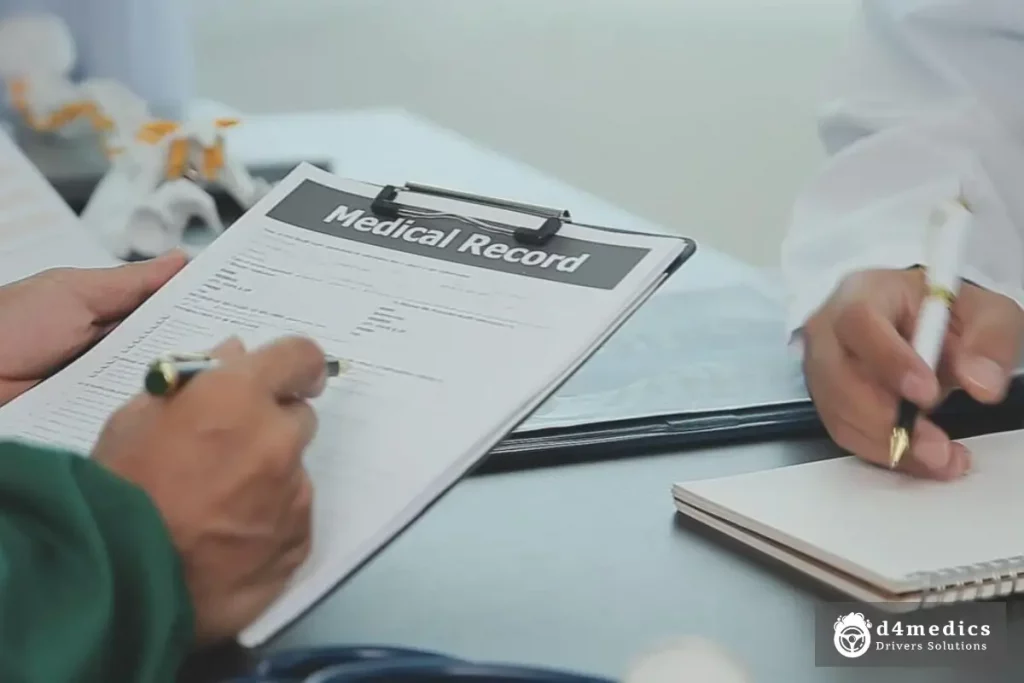
The fundamental form is the D4 form that is filled in by the doctor when you are visiting. This form is your medical proclamation of health. It is also important to understand the validity; signed D4 is usually four months after the date of assessment, and therefore you must ensure that you send the D4 to the DVLA as soon as possible.
The Three Pillars of the Examination
To understand how to pass a d4 medical, you must first understand what the doctor is testing. The analysis dwells on three main domains; Vision, Cardiovascular health and Neurological/General health.
| Assessment Area | Key Tests Involved | Standard Required to Pass |
| Vision & Eyesight | Visual Acuity (Snellen Chart), Visual Fields, Color Perception. | Capable of reading a number plate that is 20m away. At least 6/7.5 in the better eye and 6/ 60 in the worse eye. |
| Cardiovascular | Resting Blood Pressure, Pulse check, Heart rhythm auscultation. | BP should always be under 180/100 mmHg. Reviews are usually triggered by lower thresholds (140/90). |
| Medical History | Diabetes management (HBA1C), neurological (epilepsy/strokes), medication. | Blood glucose readings are required in 6 weeks among insulin-dependent diabetics. Epilepsy 10 years without seizures. |
What is Tested in a D4 Medical? A Clinical Breakdown
At book d4 medical, you will be subjected to a physical examination that takes about 2030 minutes. The clinical science focuses on preventing sudden incapacitation while driving, which is why driver medicals follow strict evaluation standards.
1. The Vision & Eyesight Barrier
This is the most common reason for failure . The physician will examine your field of vision through your pair of field glasses. In case you use glasses or contacts, you have to carry them to the appointment. The vision must be at least 6/7.5 in one eye. This is much sharper as compared to the standard car test.
- Pro Tip: Do not rely on old glasses. Before the driver medicals uk appointment, ensure that your prescription is current.
2. Cardiovascular Rigour
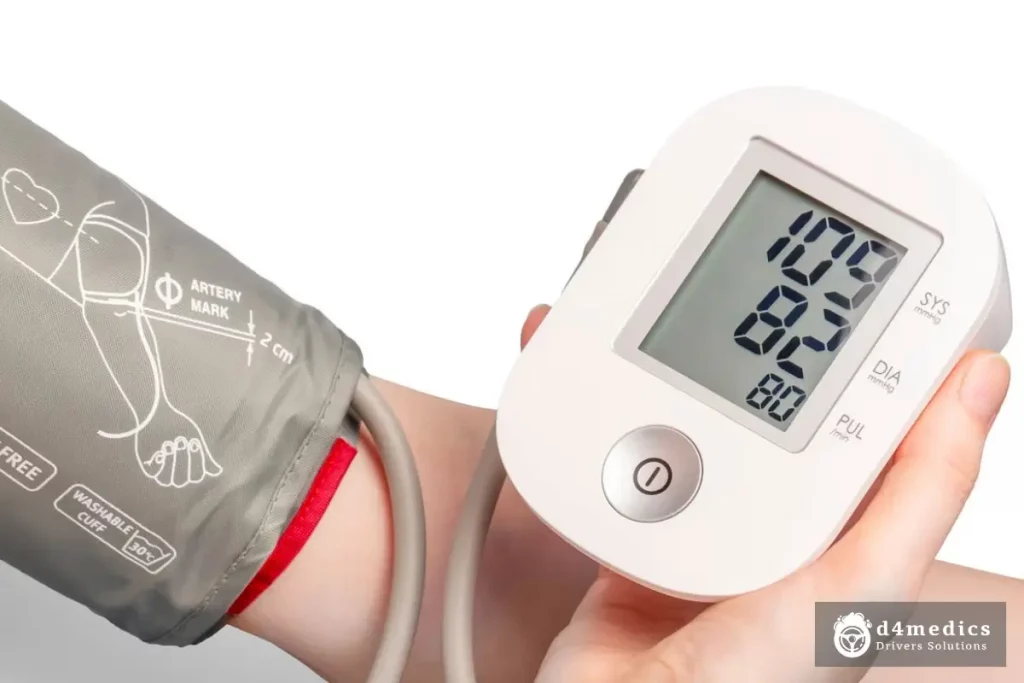
Blood pressure is a serious measure. The DVLA seeks after uncontrolled hypertension. In case of your reading of 180/100 mmHg or more, you will automatically fail. Nevertheless, provided that your blood pressure is regulated by medication and stable, you will pass. The physician is seeking the possibility of heart attack or stroke on the road.
3. The Diabetes Protocol
The dvla health requirements are special to those who are in charge of diabetes, especially those who are under insulin management. You should prove that you are not severely hypoglycemic. You will be required to give your blood glucose meter or logbook with at least two months of reading demonstrating that you test at least twice a day and prior to driving.
What Will Make You Fail the D4 Medical
Knowing what will make you fail the d4 medical allows you to fix issues before you attend the clinic. In addition to the eye test, there are special clinical conditions that result in automatic disqualification or temporary suspension.
- Uncontrolled Medical Conditions: You are not allowed to drive at all within one year of having a stroke, transient ischaemic attack (TIA), or heart attack before you can get a new application approved again.
- Epilepsy: Epilepsy drivers should not have had any seizure in a decade without using anti-epileptic medication. In case you need medication to manage seizures, you cannot have a Group 2 licence.
- Severe Obstructive Sleep Apnoea (OSA): You will fail to get through without treatment of OSA. But in case you are already using a CPAP machine and can prove compliance (records of use), the DVLA will normally issue a licence with an annual review.
- Substance Misuse: Addiction to alcohol or drugs or current misuse issue leads to a failure. The physician will examine a sign of liver damage or withdrawal symptoms.
How Long Does a D4 Medical Take and What to Bring?
EEfficiency is key for professional drivers. The answer to how long does a d4 medical take is usually between 15 to 30 minutes. Prior to booking d4 medical, assemble your papers.
Preparation Checklist
You are to prepare your “clinical dossier” prior to booking d4 medical. The first cause of delays even when one is healthy is missing paperwork.
- Identification: Photocard driving licence and a passport.
- Vision: Your vision aids and your new prescription.
- Medication: Repeat prescriptions list or the medication boxes.
- Medical Records: In case you have a history of heart problems or diabetes, carry hospital letters, ECGs (Echo-cardiograms or Exercise Tolerance Tests), or your blood sugar reader.
How to Check if Passed D4 Medical and Next Steps
Upon the examination, the doctor will sign the D4 form on the spot provided that you are up to the standards. The clinic does not normally send you a separate pass letter. The shape is your testimony. This filled D4 form should be sent to the DVLA together with the D2 application form. In case you failed d4 medical, the doctor will tell you the reason why. In many cases, it is a short-term problem, like high blood pressure. Here, you can manage the condition (e.g., prescribe BP medicine) and retest after a stability period. The question of how can i check if passed d4 medical is simple: if the DVLA issues your new licence, you have passed. If they write to you requesting more information or a specialist report, your application is under review.
How to Pass a D4 Medical: Strategic Preparation
It takes a decisive way to pass. Knowing the d4 medical requirements and adhering to them adequately is a sure way of improved results.
- Normalize Blood Pressure: No caffeine, nicotine, or salty food 24 hours prior to test. Make sure that you have ample sleep, because being tired increases bp.
- Blood Sugar Control: In case of diabetic drivers, strict blood sugar observation during the two weeks before the d4 medical is important. Make sure that there are no cases of hypo.
- Medication Compliance: It is not enough to take your medication. You have to be in a position to demonstrate that you are taking it. Carry the repeat prescription or GP letter.
The Role of Specialist Providers
Your NHS GP may technically do the medical however most have long waiting lists or are very expensive. Professional specialists such as D4 Medics specialize in commercial driving medical evaluations. Their systematic view makes them abide by the dvla health demands and enhances the precision of the d4 medical test records. They are aware of the particular wording the DVLA seeks on the form. Through the use of a special service, the doctor will be aware of how best to record such stable conditions as controlled blood pressure or diabetes that is under control, which will translate a possible failure into a success.
Common Mistakes That Lead to Failure
Even healthy drivers lose because of administrative issues. The following are the most common errors to be avoided:
- Losing Corrective Lenses: In case your licence states that you need glasses, then you must wear them during the test. The most preventable fail is the eye test due to leaving them in the truck.
- Missing Medical History: It is risky to lie to the doctor regarding the past conditions. DVLA is able to match NHS records. In case you had a heart procedure within a decade ago, state it and provide the surgical discharge summary. A “cover-up” results in a fine of up to £1,000 .
- The Urine Test Myth: Urine tests were conventional in the past. The present-day guidance by DVLA has eliminated the regular urinalysis of glucose, but it may still be provided as a screening measure in some clinics. Unless you are diabetic out of control, there is no cause to be concerned about this
Conclusion
The D4 medical is a scientific evaluation on your physical stamina. By knowing what a d4 medical is examining the Snellen chart, and the sphygmomanometer you turn the exam into a compliance check.
A D4 medical needs your body to be like the finely tuned machine you are expecting it to operate. Manage your blood pressure, check your sight and record your health history with care. Register a reputable provider so that the d4 dvla information medical requirements are accurately met. When the driver is healthy, the road becomes safer.
Leave a Reply