A driver carrying excess weight faces higher risks on multiple fronts. High blood pressure. Type 2 diabetes. Sleep apnoea. These three conditions cause more failed D4 medical results than any other health issues combined. The good news sits on the other side of the scale. Weight loss improves every single one of these conditions.
Medical fitness to drive depends on stable, controlled health. A high BMI alone does not fail a D4 medical. The DVLA has no rule that says “BMI over 35 equals automatic failure.” But the complications of obesity do cause failure. High blood pressure from excess weight. Uncontrolled diabetes from poor diet. Severe sleep apnoea from fat deposits around the airway. This guide explains the real relationship between weight and your licence. More importantly, it gives you a practical pathway to pass your assessment.
Driver medicals uk providers like D4 Medics assess thousands of overweight drivers each year. Their doctors understand commercial driving medical standards for drivers carrying extra weight. They see drivers pass every day after making targeted changes. You can join them.
What the D4 Medical Actually Checks
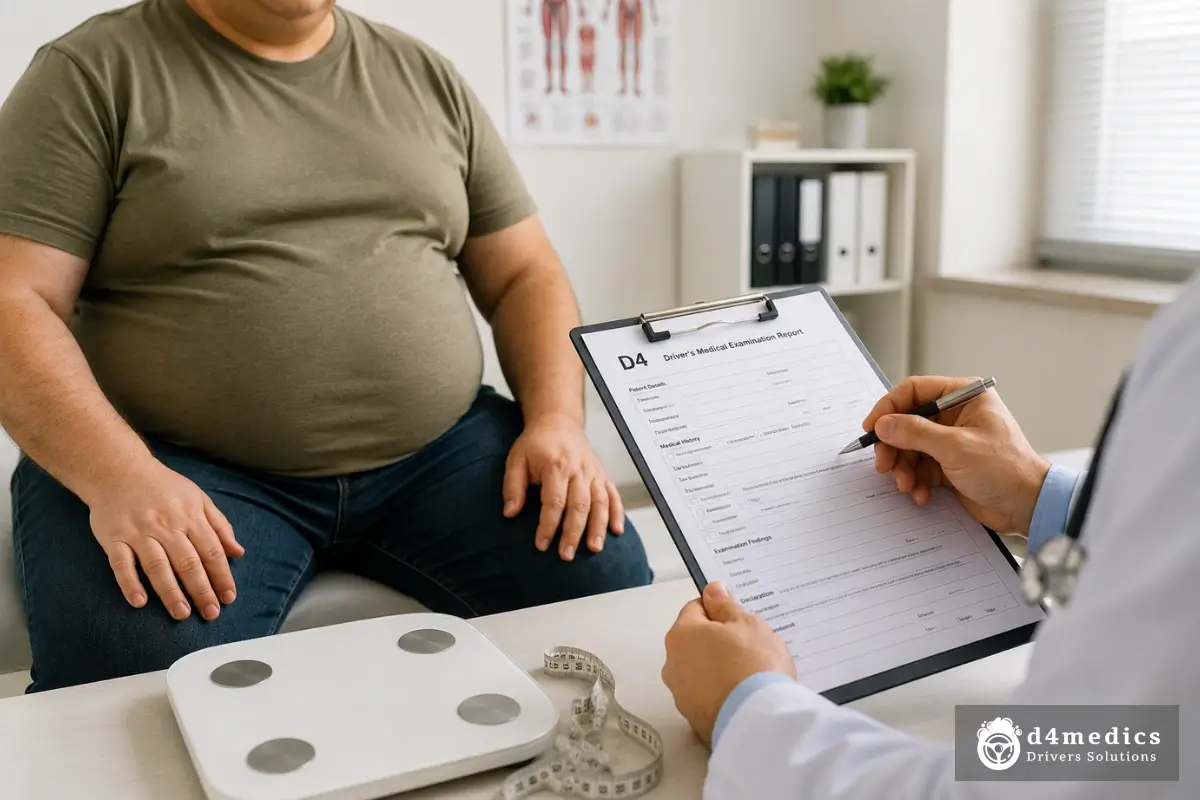
The D4 medical examination starts with basic measurements. The doctor asks your height. The doctor asks about your weight. A scale confirms the number. The doctor calculates your Body Mass Index (BMI) using a standard formula. This number helps identify drivers at risk of obesity and high blood pressure, obesity and type 2 diabetes, and sleep apnoea and obesity.
BMI limits for HGV drivers do not exist as a standalone rule in the DVLA handbook. No doctor will fail you simply because the number on the scale sits above a certain threshold. However, a BMI above 35 triggers extra scrutiny during the examination. The doctor looks for specific signs of obesity related disease.
These signs include:
- Elevated blood pressure readings (above 140/90 mmHg)
- High blood sugar detected through urinalysis
- Symptoms of sleep apnoea like loud snoring or daytime fatigue
- Joint problems affecting your ability to operate pedals
- Reduced mobility for performing daily vehicle safety checks
- Shortness of breath after minimal physical exertion
The doctor records all these findings on your D4 medical form. A driver with a high BMI but no other health issues passes without restriction. A driver with a high BMI plus uncontrolled high blood pressure, untreated diabetes, or severe sleep apnoea faces a harder outcome.
Obesity and High Blood Pressure: The Direct Link
Obesity and high blood pressure share a direct cause and effect relationship that medical science has understood for decades. Excess body fat forces the heart to work harder with every beat. Each extra kilogram of fat requires additional blood vessels to supply oxygen and nutrients to the tissue. The heart must pump against higher resistance. Blood pressure rises as a natural consequence.
High blood pressure and obesity together create serious risk for professional drivers. A driver carrying excess weight who also has elevated blood pressure faces three times the risk of a heart attack or stroke compared to a normal weight driver with normal BP. This risk translates directly to DVLA decision making. A driver who suffers a heart attack behind the wheel of a 40 tonne lorry endangers everyone on the road.
Weight loss to lower blood pressure is the most effective non medication treatment available. Research from major medical studies shows that losing 5 to 10 percent of your body weight reduces systolic blood pressure by 5 to 10 mmHg. For a driver weighing 120 kilograms, losing just 6 to 12 kilograms can move BP readings from the monitored zone (140/90 to 179/99) into the normal zone (below 140/90).
DVLA health requirements for drivers with weight related hypertension demand stable readings below 180/100 mmHg. Readings above this threshold cause automatic failure. Readings between 140/90 and 179/99 pass the medical but trigger a one year restricted licence with annual renewal. Weight loss achieves stable lower readings without medication for many drivers. Some drivers who start a structured weight loss plan see BP improvements within 4 to 6 weeks.

Obesity and Type 2 Diabetes: The Preventable Condition
Obesity and type 2 diabetes have a powerful connection that every professional driver should understand. Excess fat, particularly the fat stored around the abdomen, releases chemicals that make the body resistant to insulin. The pancreas tries to compensate by producing more insulin. Eventually, the pancreas cannot keep up. Blood sugar rises. Diabetes develops.
Obesity and type 2 diabetes together trigger mandatory DVLA notification for Group 2 drivers. Unlike obesity and high blood pressure which only requires notification at the time of diagnosis or medication initiation, diabetes demands annual reporting even when perfectly controlled. A diabetic driver must submit a D4 medical every year for the rest of their career.
The good news about obesity and type 2 diabetes is that weight loss can prevent the condition entirely. A driver with pre-diabetes, defined as an HbA1c between 42 and 47 mmol/mol, can return to normal blood sugar levels by losing 5 to 7 percent of body weight. For a 100 kilogram driver, that means losing just 5 to 7 kilograms. For a newly diagnosed diabetic driver, weight loss of 10 to 15 percent can achieve remission. No medication required. Just consistent, sustainable changes.
DVLA health requirements for obesity related diabetes demand stable HbA1c below 69 mmol/mol and no severe hypoglycaemia episodes. A driver who achieves these targets passes the D4 medical. A driver who fails either target faces licence suspension until control improves. Weight loss achieves both targets simultaneously.
Sleep Apnoea and Obesity: The Nighttime Danger
Sleep apnoea and obesity share the strongest link of all three conditions. This is the most common obesity complication that drivers do not know they have. Excess fat deposits around the upper airway. During sleep, throat muscles relax as they do in every human. But in a person with obesity, the fat deposits press inward. The airway collapses completely. Breathing stops for 10 to 30 seconds. The brain detects low oxygen and partially wakes the body. The airway opens with a gasp or snort. This cycle repeats hundreds of times per night.
Sleep apnoea and obesity together cause severe daytime sleepiness, poor concentration, slowed reaction times, and dramatically increased crash risk. A driver with untreated sleep apnoea is up to 12 times more likely to have a collision compared to a healthy driver. Studies of major lorry accidents have found undiagnosed sleep apnoea in a significant percentage of drivers who fell asleep at the wheel.
Weight loss to lower blood pressure also treats sleep apnoea effectively. Losing 10 percent of your body weight reduces apnoea severity, measured by the Apnoea Hypopnoea Index (AHI), by approximately 50 percent in many drivers. A driver with moderate sleep apnoea (AHI 15-29) can drop to mild (AHI 5-14) or even normal (AHI below 5). For some drivers, weight loss eliminates the need for CPAP therapy completely.
DVLA health requirements for sleep apnoea and obesity demand CPAP compliance above 85 percent for drivers with confirmed OSA. The machine must be used for at least 4 hours per night on 85 percent of nights over a 3 month period. Weight loss reduces the pressure setting needed on the CPAP machine. Weight loss improves compliance because the mask feels more comfortable. Weight loss leads to better sleep, safer driving, and a successful D4 medical.
How Obesity Affects Each Part of the D4 Medical
| D4 Medical Component | How Excess Weight Affects the Result |
| Blood Pressure Measurement | Higher readings due to increased cardiac workload and vascular resistance |
| Urinalysis | May detect glucose from undiagnosed or poorly controlled diabetes |
| Medical History Review | Obesity increases risk scores for heart disease, stroke, and diabetes |
| Physical Examination | Limited mobility may affect ability to perform daily vehicle safety checks |
| Vision Test | Obesity linked to diabetic retinopathy, cataracts, and glaucoma risk |
| Overall Fitness Rating | Multiple obesity related conditions increase likelihood of failure |
How to Lose Weight Before Your D4 Medical
Obesity and D4 medical preparation should start 12 weeks before your appointment date. This gives you enough time to see meaningful changes in blood pressure, blood sugar, and sleep apnoea symptoms. These practical steps work for professional drivers who spend long hours in a cab.
Plan your meals ahead of time instead of relying on fast food. A driver who prepares food at home saves 500 to 1000 calories per shift compared to eating at service stations. Pack healthy snacks like nuts, fruit, Greek yoghurt, and hard boiled eggs. These foods keep you full without spiking blood sugar.
Drink plenty of water throughout your shift. Thirst mimics hunger in the brain. A driver who drinks 2 to 3 litres of water daily eats less without conscious effort. Keep a large water bottle in the cab. Refill it at every stop.
Move your body whenever possible during your shift. Stretch your legs at rest stops. Take short walks around the truck while the fuel pump runs. Do simple seated exercises in your cab. Ten minutes of movement per hour prevents blood sugar spikes and burns extra calories.
Reduce your portion sizes without changing what you eat. This is the easiest first step. A driver who cuts portions by 20 percent loses 0.5 to 1 kilogram per week without dieting or suffering. Use a smaller plate. Stop eating when satisfied, not stuffed.
Choose protein over carbohydrates for your main meals. Eggs, chicken, fish, and Greek yoghurt keep you full for 3 to 4 hours. Bread, pasta, and rice keep you full for 1 to 2 hours. Protein also requires more energy to digest, burning extra calories.

Failed D4 Medical Due to Weight? Here Is Your Recovery Pathway
A failed D4 medical due to an obesity related condition is not a permanent disqualification. Thousands of drivers fail once, make changes, and pass on the second attempt. Follow this recovery pathway step by step.
- Step one: Request the exact reason for failure from the doctor. Is it blood pressure? Is it blood sugar from diabetes? Is it sleep apnoea requiring CPAP? You cannot fix what you do not know.
- Step two: Focus on the specific condition identified. A driver with obesity and high blood pressure needs BP control. A driver with obesity and type 2 diabetes needs glucose stability. A driver with sleep apnoea and obesity needs CPAP compliance plus weight loss.
- Step three: Lose 5 to 10 percent of your body weight over 3 months. This level of weight loss improves all three conditions simultaneously. Blood pressure drops. Blood sugar stabilises. Sleep apnoea severity reduces by half.
- Step four: Repeat the relevant tests for your condition. Home blood pressure monitoring over 2 weeks. HbA1c blood test at your GP surgery. Sleep study or CPAP compliance download.
- Step five: Book a repeat D4 medical with documentation of improvement. Bring your BP log. Bring your HbA1c result. Bring your CPAP compliance report. Most drivers who failed due to obesity related conditions pass on the second attempt.
Book Your D4 Medical With D4 Medics
Book D4 medical appointments with D4 Medics for a professional, understanding assessment. Their GMC-registered doctors specialise in commercial driving medical evaluations for drivers carrying extra weight. You will receive no judgement. No bias. Just an honest, clinical assessment focused on your safety and your licence.
Driver medicals uk drivers trust D4 Medics for transparent pricing, fast appointments, and correct documentation. Book D4 medical online through their website or by phone. Same week appointments are typically available. Submit your completed form to the DVLA. Get your licence. Return to work.
Obesity and HGV licence outcomes improve dramatically with weight loss. DVLA health requirements obesity are not punishment. They exist to protect drivers from preventable disease. Take control of your weight. Take control of your health. Pass your D4 medical. Keep your licence. Keep driving safely.